Service-as-a-Software: Why Service Firms Will Be the Winners of AI
Service-as-a-Software: how service firms sell outcomes at software-like margins, powered by agentic systems and with people in charge of the judgment calls.
The problemYour service firm competes on billable hours just as AI threatens to make exactly that work cheaper.
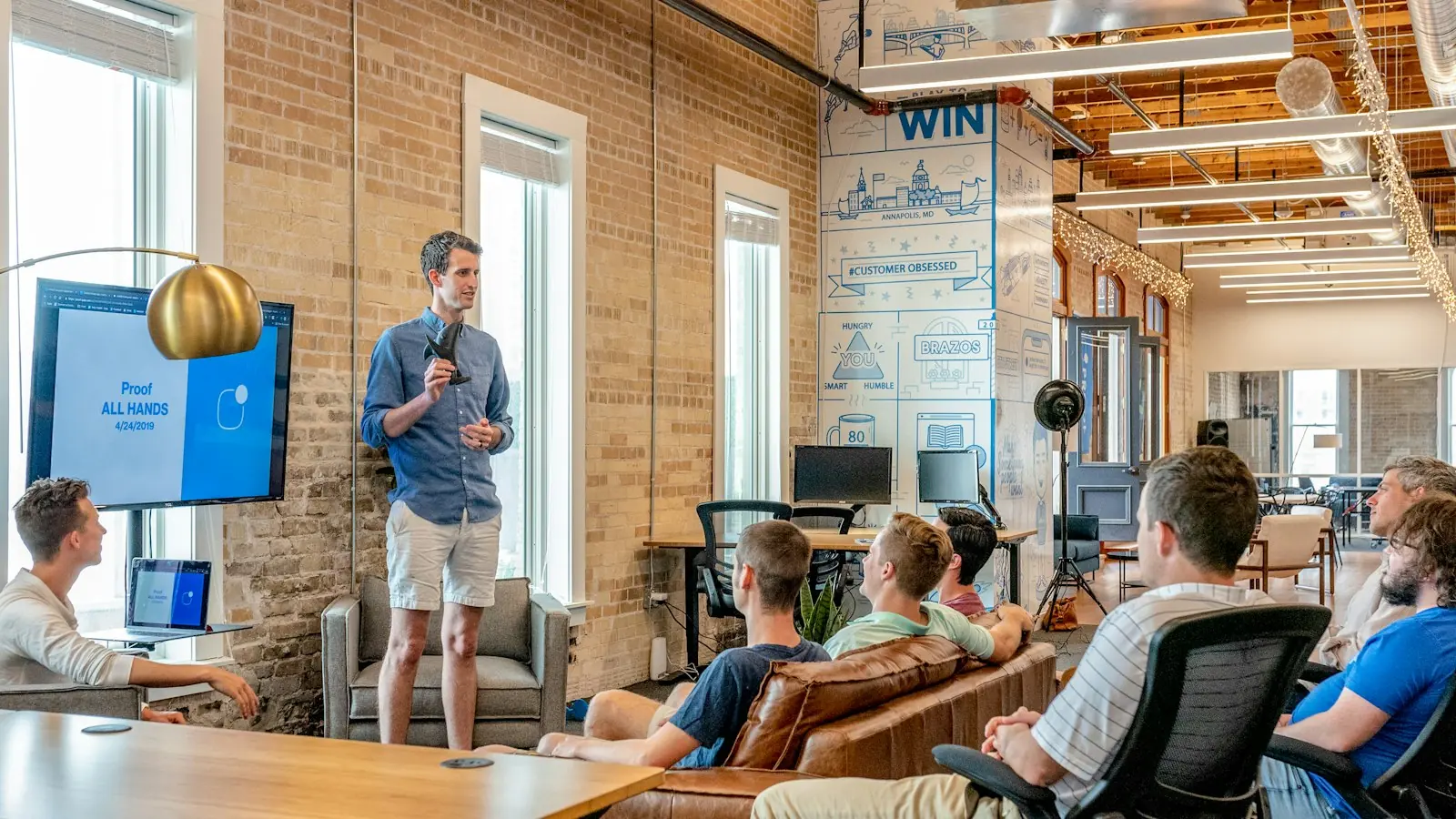
A creative agency is presenting its annual proposal to a long-standing client. The client listens, then calmly asks: "If AI now does a good chunk of this, why is the hours budget the same as last year?" The agency's managing director doesn't have a good answer, because the business is built on hours. Service-as-a-Software is the answer to that question: stop selling hours and start selling outcomes, produced by a system that runs at software margins.
This conversation is already happening at agencies, law firms, consultancies and accounting practices. And the question isn't whether AI will change professional services, but who will capture the value of that change.
The problem with the billable-hour model
For decades, service firms have sold time. More clients meant more people, and margins depended on how many billable hours you could get per person. That model had one advantage: it was easy to explain. And one limit: margins never scaled.
AI goes straight at the part of the work that filled those hours: research, drafting, review, prep, follow-up. If you keep billing by the hour, every efficiency gain cuts your revenue. If you don't adopt the technology, a competitor who did will deliver the same thing faster and cheaper. It's a trap, and the only way out is to change the model.
What Service-as-a-Software is
The idea is simple: the service firm sells an outcome and produces it with software. It doesn't sell the client a tool to operate; it delivers the finished work: the campaign ready to launch, the case filed, the reconciliation closed, the report delivered.
Under the hood, that outcome is produced by an agentic system: specialized agents for each process, a shared business memory, workflow orchestration, human approval by role, observability and cost control. From the outside, the client sees a high-quality service, delivered faster and at a price that no longer depends on hours.
In practice, a firm like this has three traits:
- It sells outcomes, priced per deliverable, per case or per account.
- It runs on a system, not on individual heroics.
- It puts people where they matter: judgment, relationships and accountability to the client.
Why people stay at the center
Service-as-a-Software isn't "services without people." It's the opposite. What makes a professional service valuable is that someone with judgment stands behind the outcome. A client doesn't hire a law firm for its drafting speed: they hire it because they trust that someone reviewed their case and signed off.
That's why these systems are designed with humans in the loop. Agents prepare, verify and propose; people decide and approve at the key points. The system gives each professional more reach; it doesn't replace them. We explain this in detail in grow without hiring.
Clients don't buy hours, and they don't buy AI. They buy an outcome they can trust. Service-as-a-Software combines the two things that make that possible: a system that produces and a person who is accountable.
Why service firms, not SaaS companies, can win
It might seem that the big software platforms will take this market. There are reasons to think otherwise:
- They already have the client. A service firm has the relationship, the contract and the trust. A SaaS company has to earn them.
- They know the domain. They know where the exceptions are, what keeps the client up at night and what counts as work done well. That knowledge is what turns a generic agent into a useful one.
- They're accountable for the outcome. A tool leaves responsibility with the user. A service takes it on. In processes with legal, financial or brand risk, that difference decides the purchase.
- They have the memory. Years of cases, clients and decisions are the raw material of a company brain. Well structured, that memory is an advantage a newcomer can't copy.
What most service firms lack isn't opportunity, but the operating system to seize it.
What it looks like in practice
At Addabra, we've built systems that show this model at work. A creative agency's Agency OS runs from brief to delivery with 27 agents and 9 workflows, with the director's sign-off at every key step; the full story is in Agency OS. At an immigration law firm, each case manager went from handling 15 to 20 active cases to handling 80 to 100, without losing the personal touch with clients.
In both cases, the change wasn't "using AI." It was redesigning operations so a system produces and people decide.
Illustrative example: an accounting firm
Imagine an accounting firm that currently bills its small-business clients by the hour for the monthly close. With an agentic system, agents receive the documents, categorize transactions, reconcile accounts and prepare a draft of the close; an accountant reviews the exceptions and signs off. The firm starts charging a flat fee per close, delivered by a guaranteed date. The client gets it faster and with more certainty; the firm serves more clients with the same team and improves its margin per account.
How to make the move: a five-stage roadmap
- Pick one service line with high volume and clear deliverables.
- Measure your current cost per deliverable: hours, errors, turnaround time.
- Build the system for that line: agents, memory, human gates, evals and cost control.
- Operate with the system while keeping current pricing until you know your new cost per deliverable.
- Shift your pricing model toward outcomes once you have the data to back it up.
Common mistakes
- Cutting instead of redesigning. Removing people without a system degrades the service and your reputation.
- Changing prices too early. Billing by outcome without knowing your real cost is a gamble.
- Buying generic tools. Your edge is your domain expertise; a system that doesn't reflect it won't set you apart.
- Taking the human out of the loop. Client trust rests on someone who is accountable.
What to do on Monday
Pick one service line and calculate what each deliverable costs you today. Then ask how much of that cost is judgment and how much is repeatable execution. That ratio is the size of your opportunity.
Addabra builds the operating system that makes this model possible: an agentic system tailored to each company, on our proven harness, with the best model for each task and people in charge of what matters. We don't sell a platform; we build yours.
Frequently asked questions
What does service-as-a-software mean?
It is a model in which a service firm sells outcomes, not hours, and produces them with an agentic system that does most of the operational work. People stay in charge of judgment and the client relationship, and margins look more like those of a software company.
Why would a service firm have an advantage over a SaaS company?
Because it already has the clients, the domain knowledge and the credibility to stand behind the outcome. A SaaS company sells a tool the client has to operate; an AI-native service firm delivers the finished work and is accountable for it.
Do I need to change my pricing model to adopt this approach?
Over time, yes: it makes sense to move from billing by the hour to billing by outcome, by case or by deliverable. Many firms start by operating with the agentic system and shift pricing in stages, once they know their new cost per deliverable.